
Energy Transition: Carbon Capture, Utilization and Storage
Comprehensive laboratory testing to support every stage of your CCUS project — from injectivity to long-term containment.
Carbon Capture, Utilization and Storage (CCUS) requires a deep understanding of how CO₂ behaves once injected underground. Our conceptual framework divides the CCS lifecycle into three interconnected stages: Injectivity, Capacity, and Containment. Each stage is supported by targeted laboratory testing that replicates field conditions and informs reservoir modeling, safety assurance, and regulatory compliance.
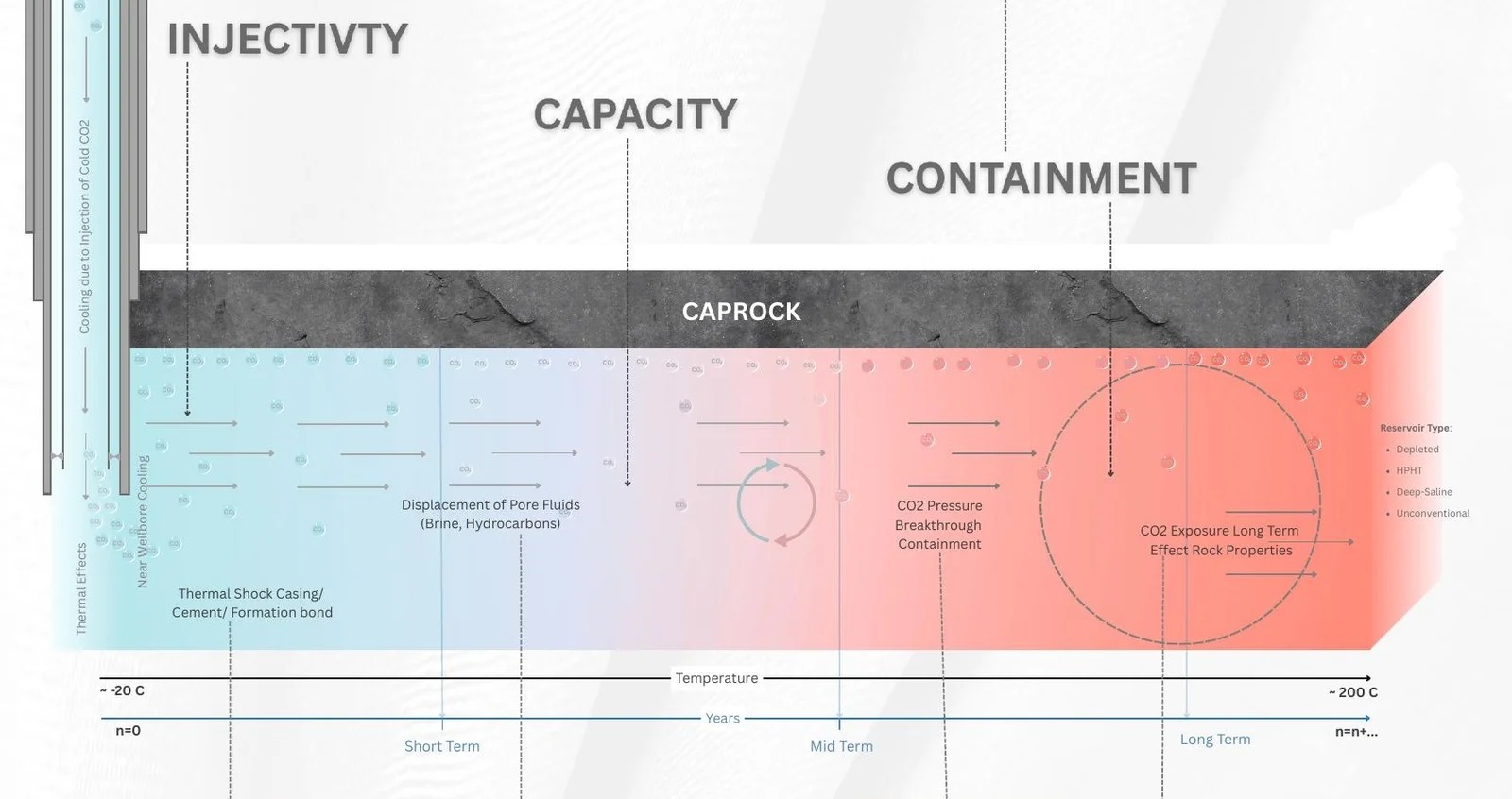
Injectivity
Near-wellbore testing evaluating thermal shock from cold CO₂ injection, cement and formation bond integrity, and displacement of pore fluids (brine, hydrocarbons) in the short-term injection phase.
Capacity
Mid-term assessment of reservoir storage capacity through CO₂ brine displacement testing and pore volume expansion measurements under realistic pressure-temperature conditions.
Containment
Long-term evaluation of caprock integrity, CO₂ pressure breakthrough testing, and CO₂ exposure effects on rock properties across depleted, HPHT, deep-saline and unconventional reservoir types.
MetaRock Laboratories provides laboratory-based support for every stage of a CCUS project. Our test protocols simulate subsurface behavior using real core samples and elevated pressure-temperature conditions. These services are developed to calibrate models, assess risk, and meet regulatory standards for conformance and containment.
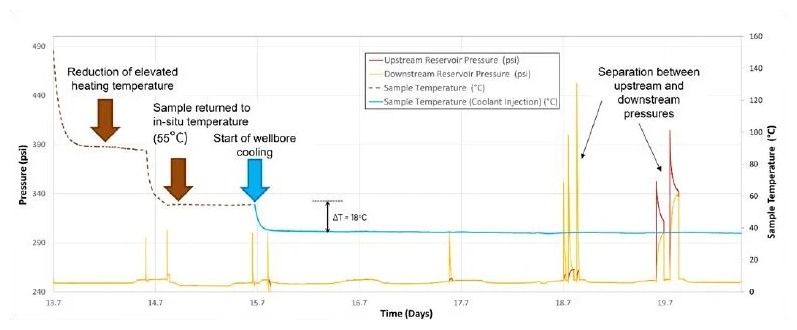
Thermal Shock Test
Simulates rapid cooling from CO₂ injection to evaluate material durability near the wellbore. Helps assess the mechanical stability of cement and formation bonds under temperature shock.
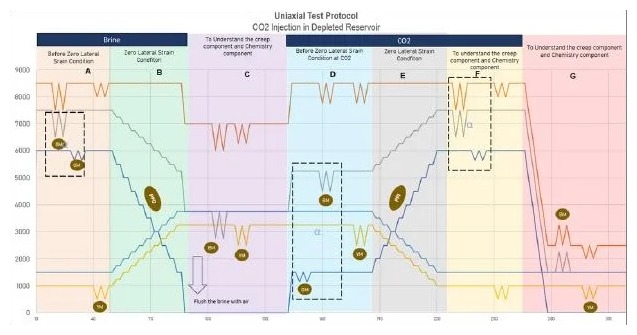
Pore Volume Expansion Test
Measures how reservoir rocks respond to increased pressure by tracking changes in pore volume. Supports poroelastic modeling and helps estimate storage capacity over time.
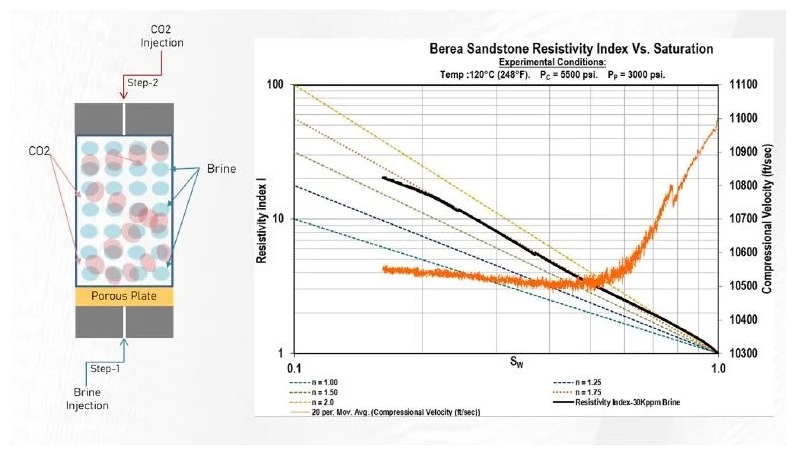
CO₂ Brine Displacement Test
Characterizes the displacement behavior of the CO₂-brine system by monitoring resistivity and ultrasonic velocity change across the sample — essential for pore space management and risk assessment.
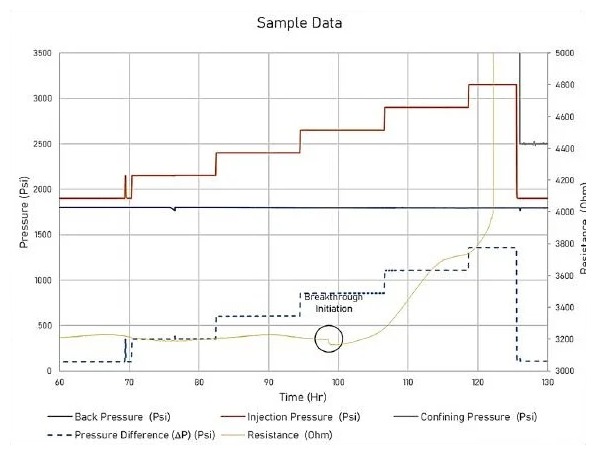
Pressure Threshold Test
Evaluates caprock integrity by identifying the pressure at which CO₂ breakthrough may occur. Provides critical data on sealing performance and long-term containment.
Ready to discuss your CCUS testing requirements?
Contact Our Team