
Rock Mechanics Testing
Fracture Toughness
Fracture toughness measures the energy required to extend a crack. It is a required input for most commercial fracture modelling software and a crucial parameter in hydraulic fracturing design.
What you receive
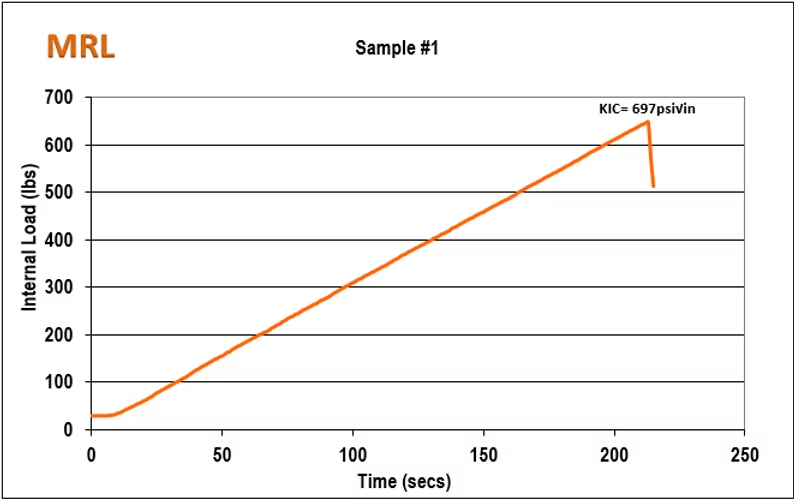
- Mode I fracture toughness (KIC)
- Anisotropy captured by notching relative to bedding
- Measured to the ISRM recommended CCNBD method
- Input ready for commercial fracture models
- Scalable sample geometry for economic material use
Sample dimensions: 2″ or 1.5″ diameter, 0.8″ or 0.6″ length.
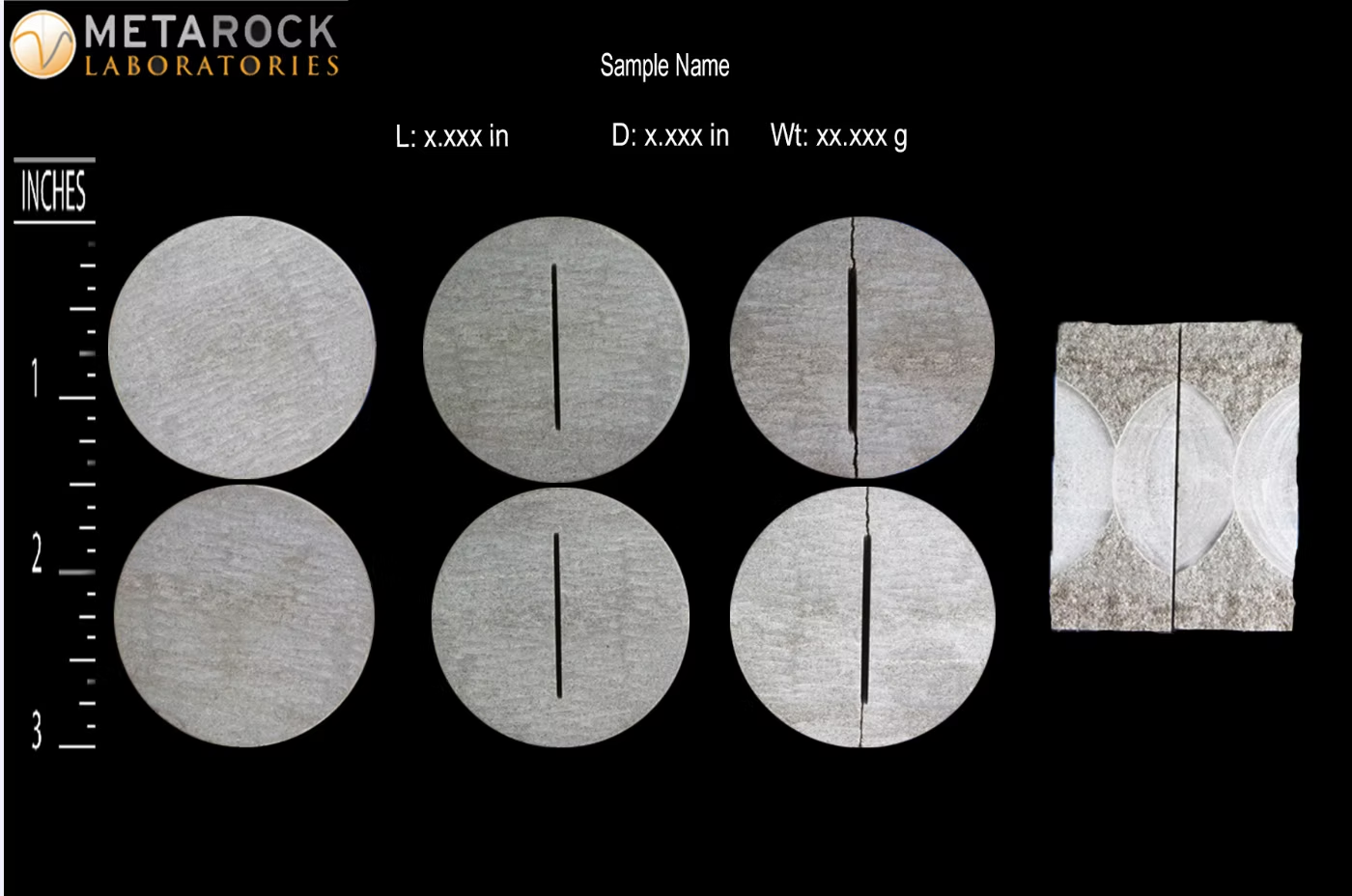
- Mode I fracture toughness is measured using the ISRM recommended Cracked Chevron Notch Brazilian Disc test.
- Notching the sample in different orientations with respect to bedding captures anisotropy in toughness, which matters in laminated and shale intervals where a fracture will follow the weakest path rather than the intended one.
- Material requirements for the CCNBD method are more economic than the other recommended methods, and sample dimensions can be scaled while still meeting the geometrical requirements.
- That matters when core is limited, since it allows toughness testing without consuming material needed for other parts of the programme.