
Rock Mechanics Testing
Brinell Hardness Number
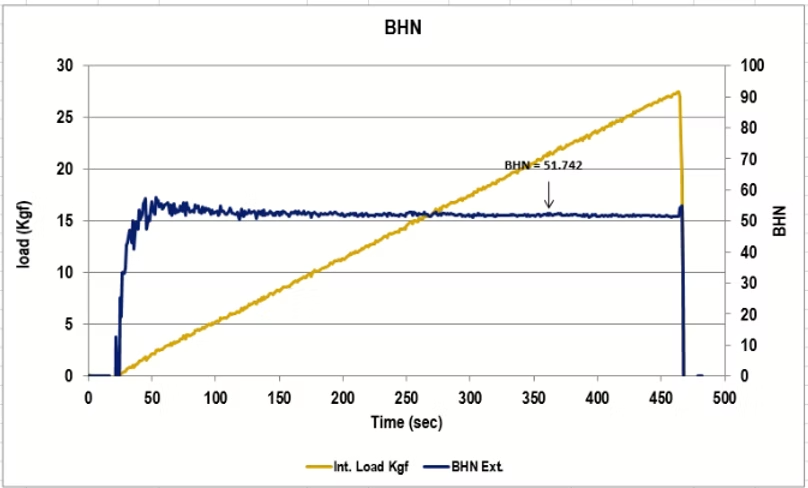
A standard materials test adapted to rock, giving an indentation strength index. Because it is quick and needs little material, it can be run repeatedly to build a continuous strength profile down a core.
What you receive
- Brinell hardness number as an indentation strength index
- Performed to ASTM E10
- Compliant with ISRM Blue Book indentation requirements
- Correlations with UCS or tensile strength
- Continuous strength profiling along core
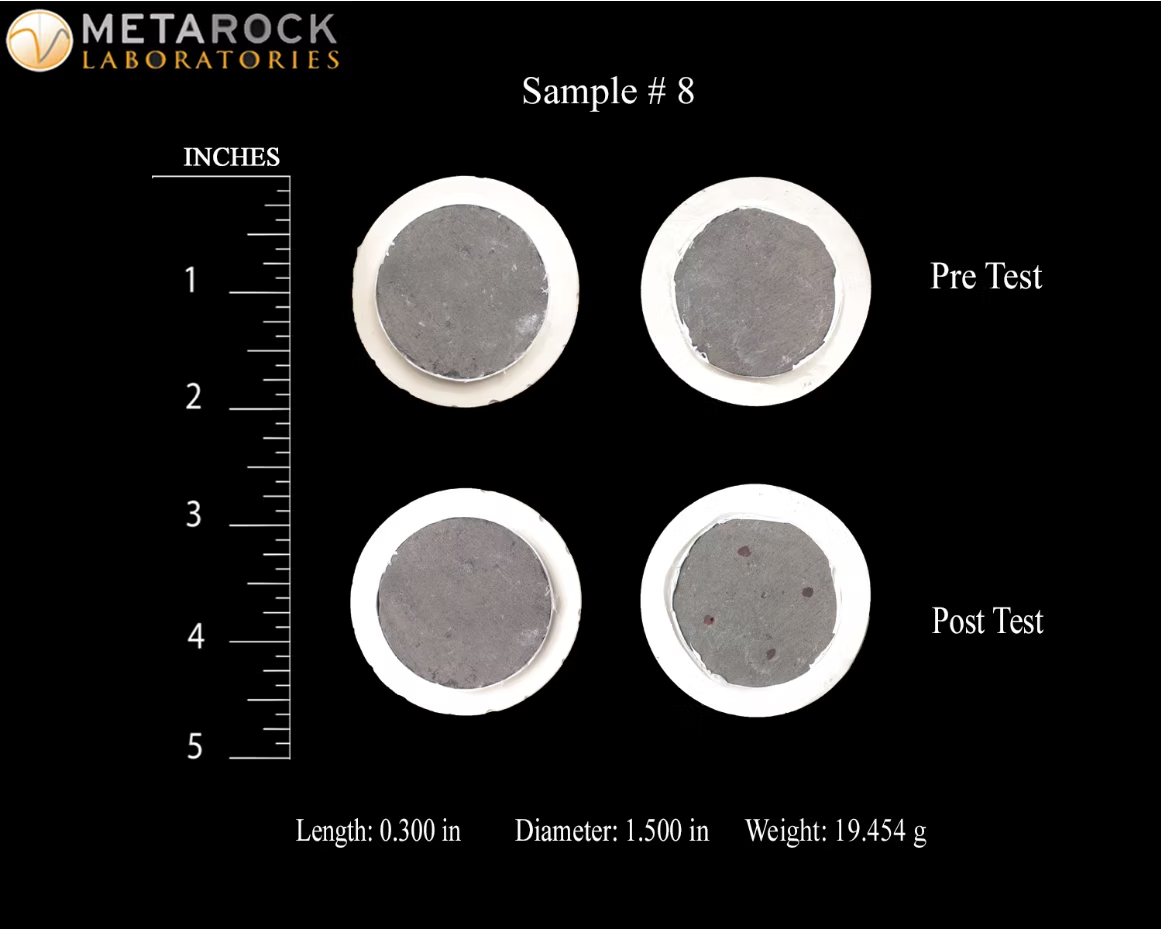
End faces must be flat for ideal indentation.
- The value of an indentation index is not the single number but the density of measurements.
- Destructive strength tests consume a plug each; indentation does not, so hardness can be measured at close spacing along an interval and then correlated against the smaller number of UCS or tensile tests that were run.
- That correlation is what turns a handful of strength measurements into a continuous profile, which is far more useful for identifying weak intervals, picking perforation points, or understanding why a section behaved differently during drilling.
- End faces have to be flat for the indentation to be valid.