
Rock Mechanics Testing
Biot’s Coefficient
Biot’s coefficient is the poroelastic constant relating deformation of the rock framework to the fluid within it. It is critical for estimating in-situ minimum horizontal stress.
What the results support
- Estimation of in-situ minimum horizontal stress
- Time-dependent wellbore failure analysis
- Prediction of fracture initiation
- Evolution of pore pressure during development
- Separate methods for conventional and unconventional rock
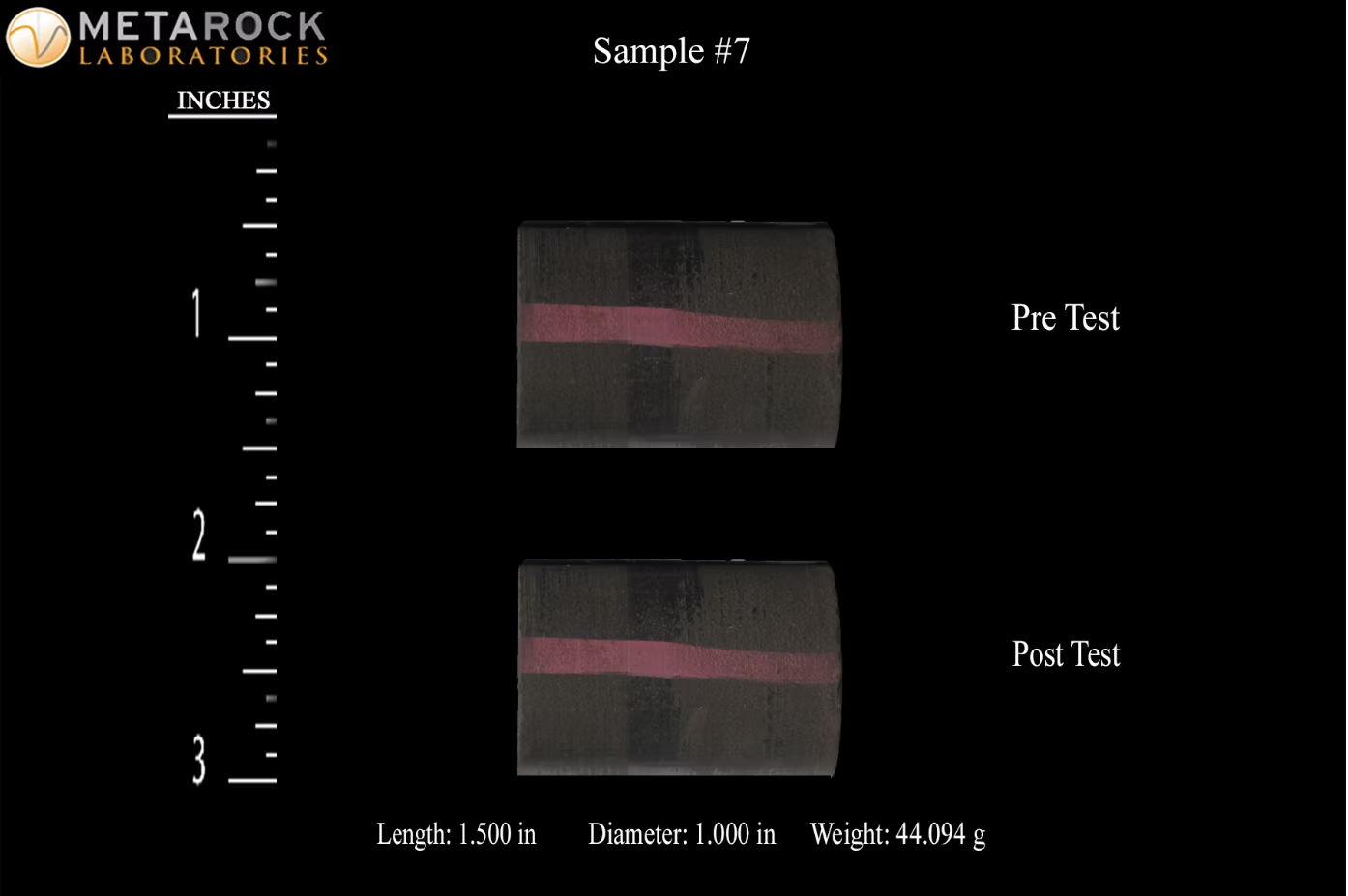
Sample dimensions: 1″ diameter × 2″ length.
- Understanding the poroelastic effect matters wherever rock deformation and pore pressure are coupled — time-dependent wellbore failure, fracture initiation, and how pore pressure evolves through development.
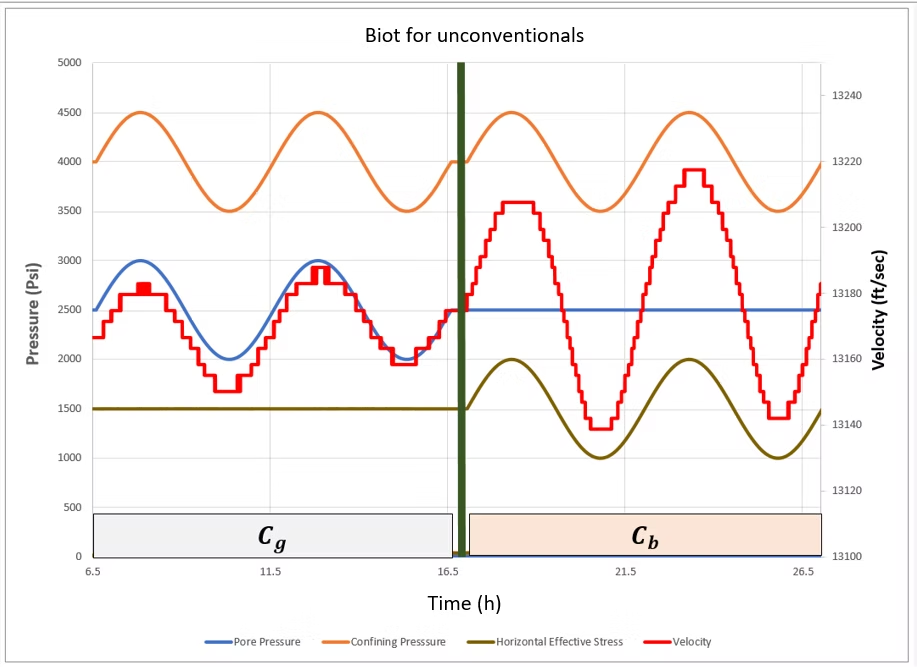
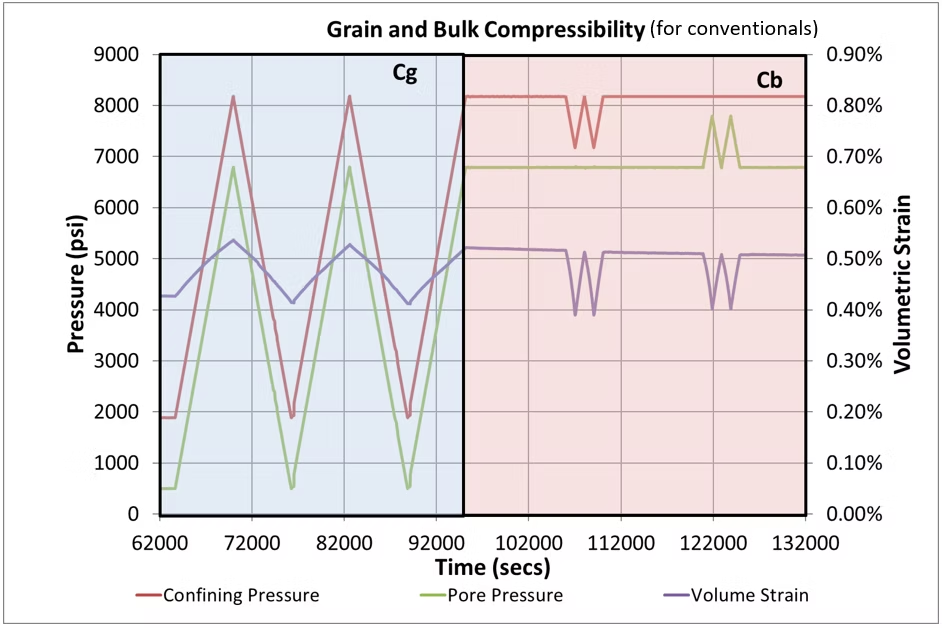
- The experiment flows fluid through the sample while varying pore pressure and confining pressure, measuring grain compressibility and bulk compressibility.
- In conventional, higher porosity rock, brine is the pore fluid, the test runs at ambient temperature, and volumetric strain characterises the poroelastic response.
- Tight rock needs a different approach: supercritical fluids reach the pore space, the test runs at 40 °C or above with pore pressure over 2,000 psi, and continuous real-time P-wave velocity replaces volumetric strain, which lacks the resolution to estimate Biot’s coefficient in tight rock.