
Pressure Transmission Testing System
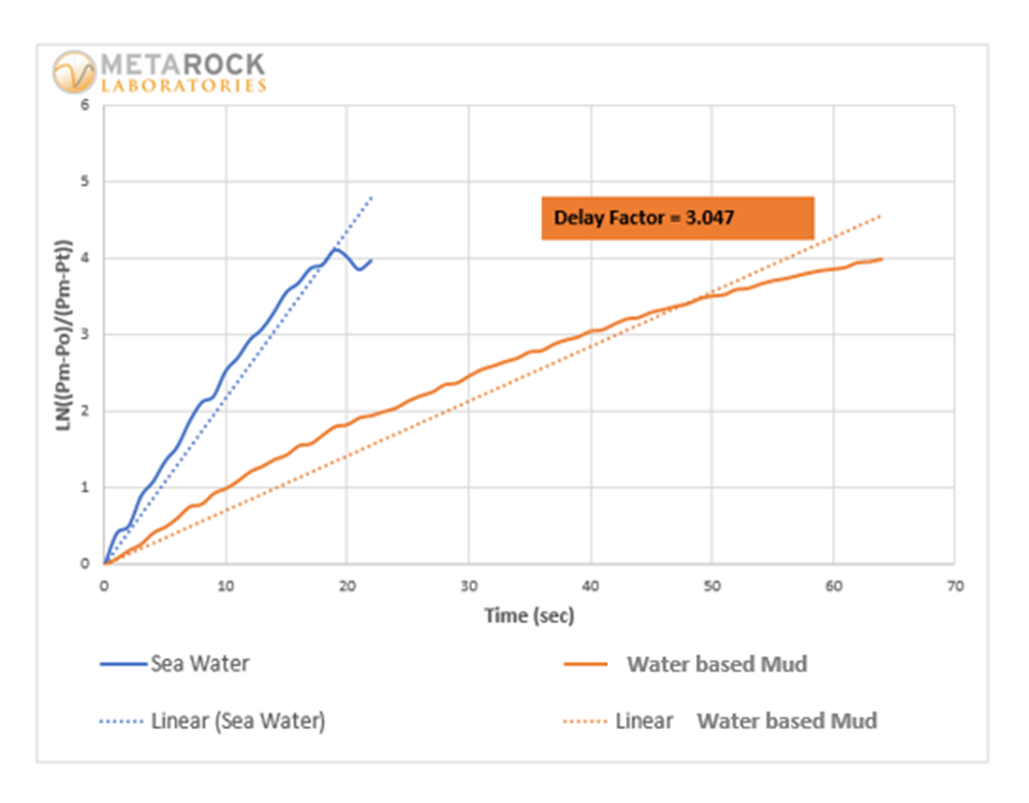
Mud–Shale Pressure Transmission TestingCompares and evaluates drilling mud performance by measuring the delay factor — how much a mud slows the transmission of pressure into shale compared to pore fluid. A higher delay factor implies a longer safe open-hole time.
How the Test Works
- Evaluates how effectively a mud slows down pore pressure build-up in shale
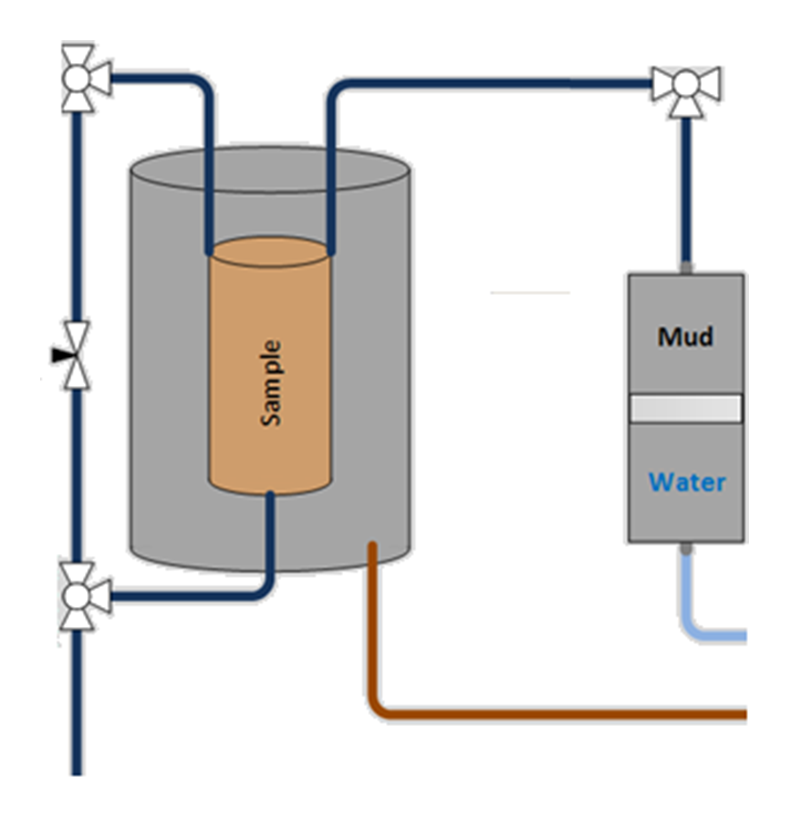
- Sample permeability is first measured using the pore fluid
- The pore fluid is then replaced by a water-based (WBM) or oil-based (OBM) mud, allowing a second permeability measurement
- The delay factor is calculated as the ratio of pore fluid and mud permeabilities
Delay Factor
- Characterizes how much the test fluid delays mud pressure transmission in shale compared to pore fluid
- Delay factors for different mud systems can be compared directly for a relative ranking of performance
- A higher delay factor implies a longer safe open-hole time
| Recommended Sample Dimensions | |
| Standard size | 3″ length × 1.5″ diameter |
| Alternative size | 2″ length × 1″ diameter |
| OD to ID ratio | 3:1 (both sizes) |
| Test Fluids | |
| Reference fluid | Pore fluid |
| Test fluid | Water-based mud (WBM) or oil-based mud (OBM) |
| Measured Outputs | |
| Permeability | To pore fluid and to mud filtrate |
| Key result | Delay factor (ratio of pore fluid to mud permeability) |
Applications
- Evaluating mud compatibility and reactivity with shale
- Comparing and ranking mud systems by their ability to delay mud pressure transmission
- Assessing the risk of time-delayed shale failure and wellbore instability
- Estimating safe open-hole time for a given mud system
- Supporting mud selection alongside triaxial testing of the shale failure envelope
Background
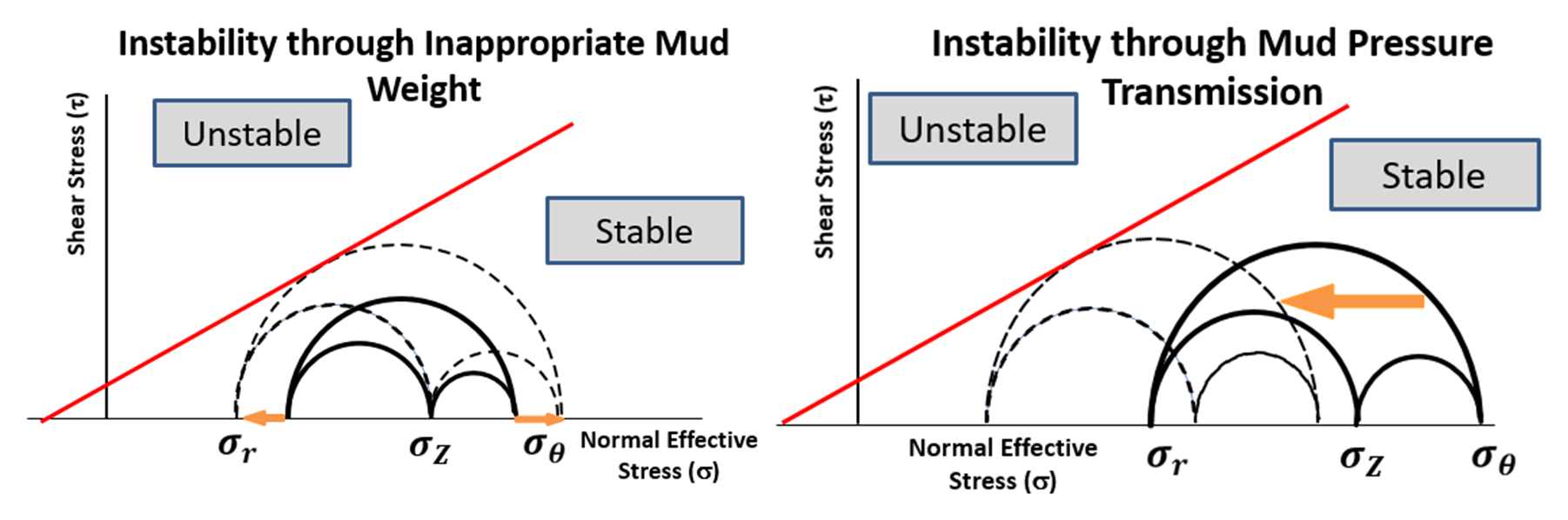
Wellbore instability occurs immediately if an incorrect mud weight is applied and the stress state touches or exceeds the failure envelope, which triaxial tests characterize through cohesion (S0) and internal friction. Even with the correct mud weight, instability can still develop over time.
The pressure transmission test measures the tendency of a mud’s filtrate, applied at overbalance pressure, to invade the shale fabric and raise near-wellbore pore pressure (van Oort, 1994). As pore pressure rises, the effective stress moves toward the failure envelope until shear failure occurs — leading to hole enlargement, cavings at the shakers, and problems ranging from pack-off and overpulls to stuck drill string and casing.
Fill in your details to receive the product brochure.
Related Products
Automated Particle Plugging Apparatus
Automated slotted disc particle plugging tester for evaluating LCM and drilling fluid sealing performance.
View Product →LCM Test System
Dedicated loss circulation material test system for evaluating LCM particle bridging and sealing capability.
View Product →HPHT Filtrate Test System
Four-station automated mud testing system for HPHT filtration, particle plugging, and breaker evaluation.
View Product →