
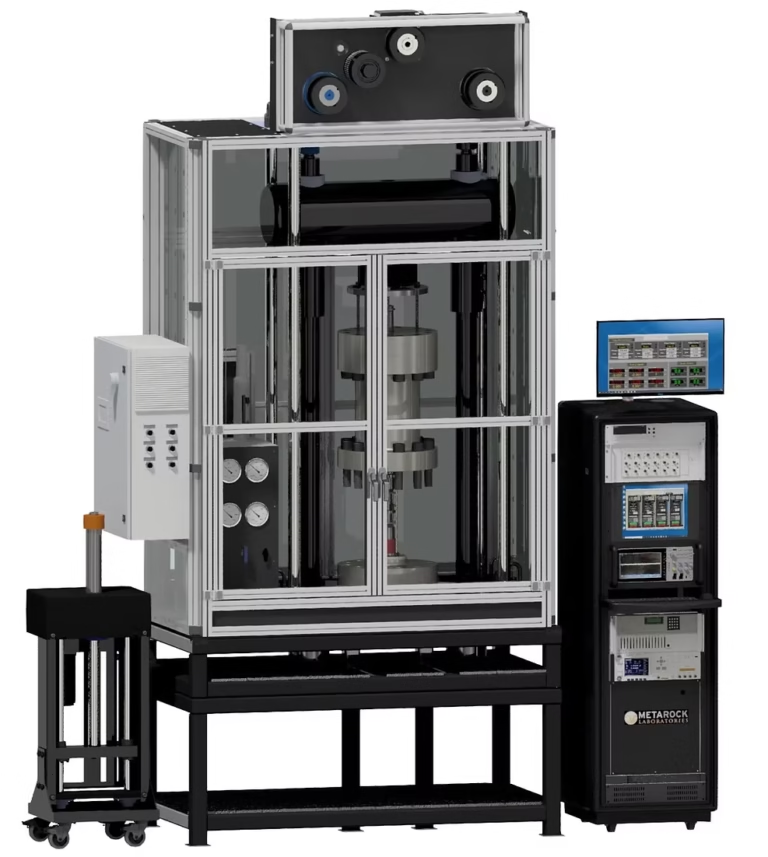
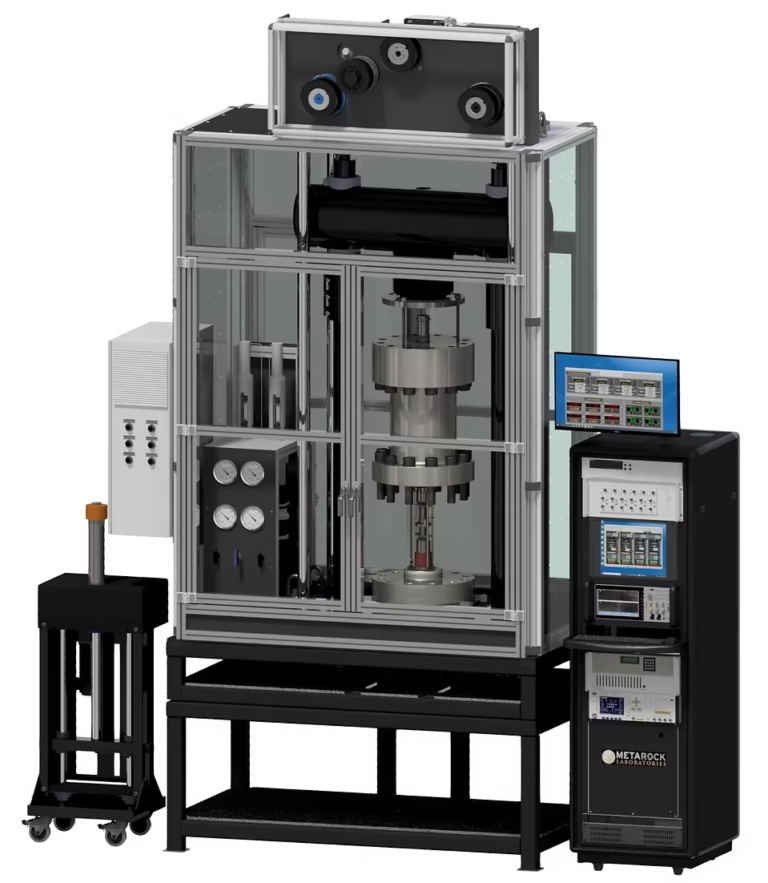
SCAL System
Our Integrated Rock Mechanics System is built to meet your research facility standards. Our system is a completely automated testing apparatus capable of performing the following tests:
- →Unconfined Compression
- →Triaxial
- →Bending
- →Indirect
- →Fracture
- →Post – Failure Behavior
- →Creep
- →Nearly any other compaction test under various stress paths
Servo Mechanical Load Frame
- 300,000 lbs Maximum Axial Load
- Position, Load, Strain and Stress Feedback Control
- Enhanced Stiffness
- Isothermal Temperature Control Enclosure
Pressure Vessel
- 30,000 psi Confining Pressure Vessel
Confining Pump
- 1 Liter Capacity
- 30,000 psi Confining Pressure
- Multi Variable Control
- 1 x 10e-6 inch resolution
Pore Pressure Pumps
- 30 CC, 30,000 psi Pore Pressure Generator
- 1 x 10e-9 inch resolution
- Booster Pump Cart for CO₂ Injection applications
Additional
- Hydrostatic confining pressure
- Pore pressure and flow rates for vertical and horizontal steady-state permeability
- Temperature up to 450℃
In-Vessel Specifications
- Accommodates samples up to 2″ diameter x 4″ length
- Upstream/Downstream Pore Pressure
- Ultrasonic Velocity
- Axial/Radial In-Vessel Instrumentation
- Internal Load Cell
- 4-Wire Resistivity Measurement
- Maximum Temperature up to 450℃ at stress
Transducers
- Electrical feed-through connectors for axial and circumferential deformation
- Axial and radial strain boundary condition
- Internal differential axial stress
- Compressional (P), 2 orthogonal Shear (S1, S2), and 45° Acoustic Transducers at 1 MHz
Measurement & Acquisition
- Acoustic electronics and oscilloscope
- Digital displays
- Real-time data acquisition
- Process control software
- Graphical user interface analysis tools
Control System
- Rackmount control system housing
- Custom-built PC
- Open software architecture to servo any measured or calculated variable
- Supports any stress path loading: Triaxial, Uniaxial, IsoStatic
- Real-time data acquisition and graphical user interface
Safety Features
- Integrated safety shutdown mechanisms
- Maximum pressure safety protocols
- Emergency stop systems
- Automated safety limits on pressure and temperature
- Position, Load, Strain and Stress Feedback Control for safe operation