
Rock Mechanics Testing
Brazilian Tensile Testing
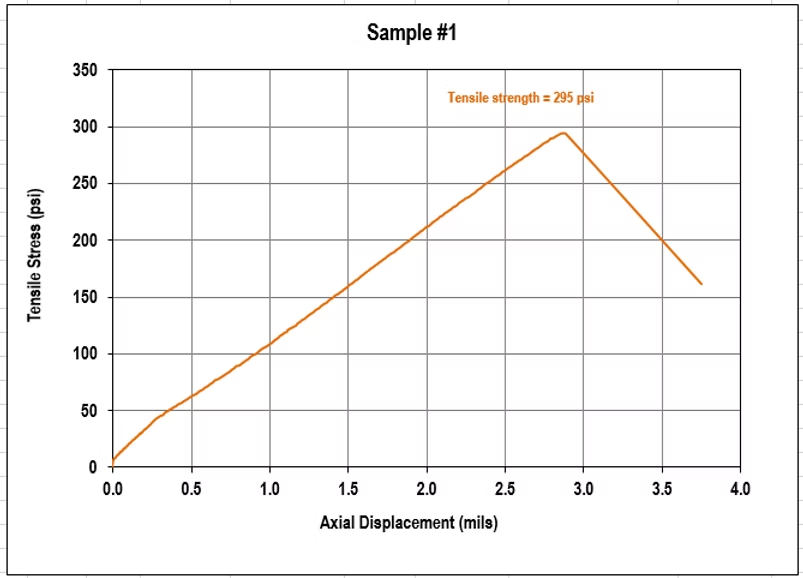
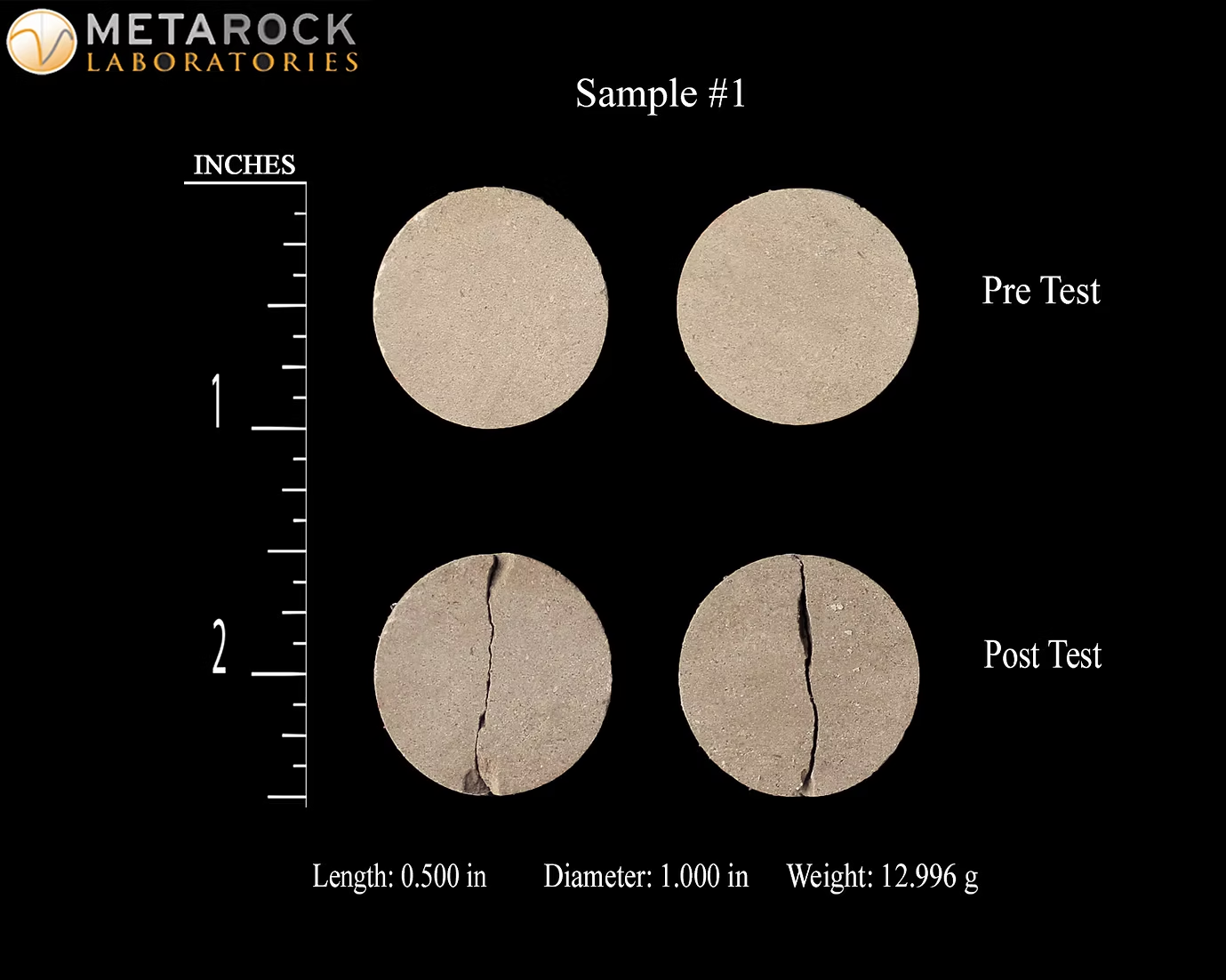
An indirect measure of tensile strength, obtained by loading a disc-shaped sample between two custom-designed metal platens until the disc splits. Tensile strength is central to characterising failure in tension and to fracture design.
What you receive
- Indirect tensile strength
- Full loading record via external LVDTs
- Custom loading strategy, including specified loading rate
- Values that correlate with UCS and fracture toughness (KIC)
Sample dimensions: 1″ diameter × 0.5″ or 1.5″ diameter × 0.75″.
- Rock is far weaker in tension than in compression, and it is tensile failure that governs whether a hydraulic fracture initiates and how it propagates.
- Measuring tensile strength directly is difficult, so the Brazilian test loads a disc across its diameter and derives tensile strength from the splitting load.
- External LVDTs mounted alongside the platens record displacement through the test, which allows a custom loading strategy rather than a single monotonic ramp.
- The resulting tensile strength correlates with unconfined compressive strength and fracture toughness, so it is often run alongside those tests as part of a single characterisation programme.