
Rock Mechanics Testing
Proppant Embedment
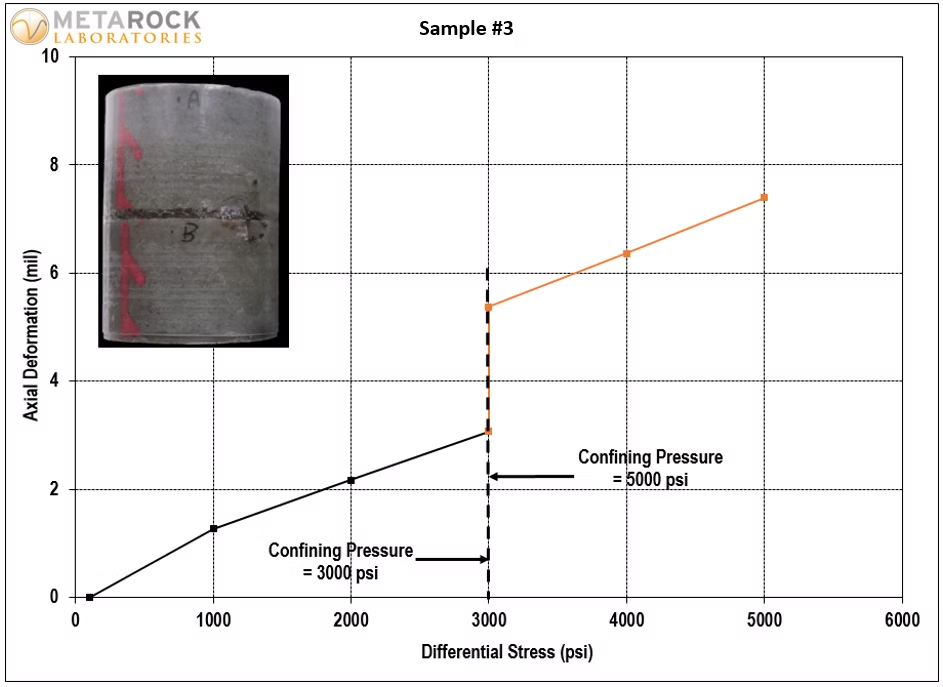
Whether proppant embeds into the fracture face, and how far, determines how much conductivity survives once the well is producing. Embedment is governed by in-situ stress and by the strength and stiffness of the rock at the fracture face.
What you receive
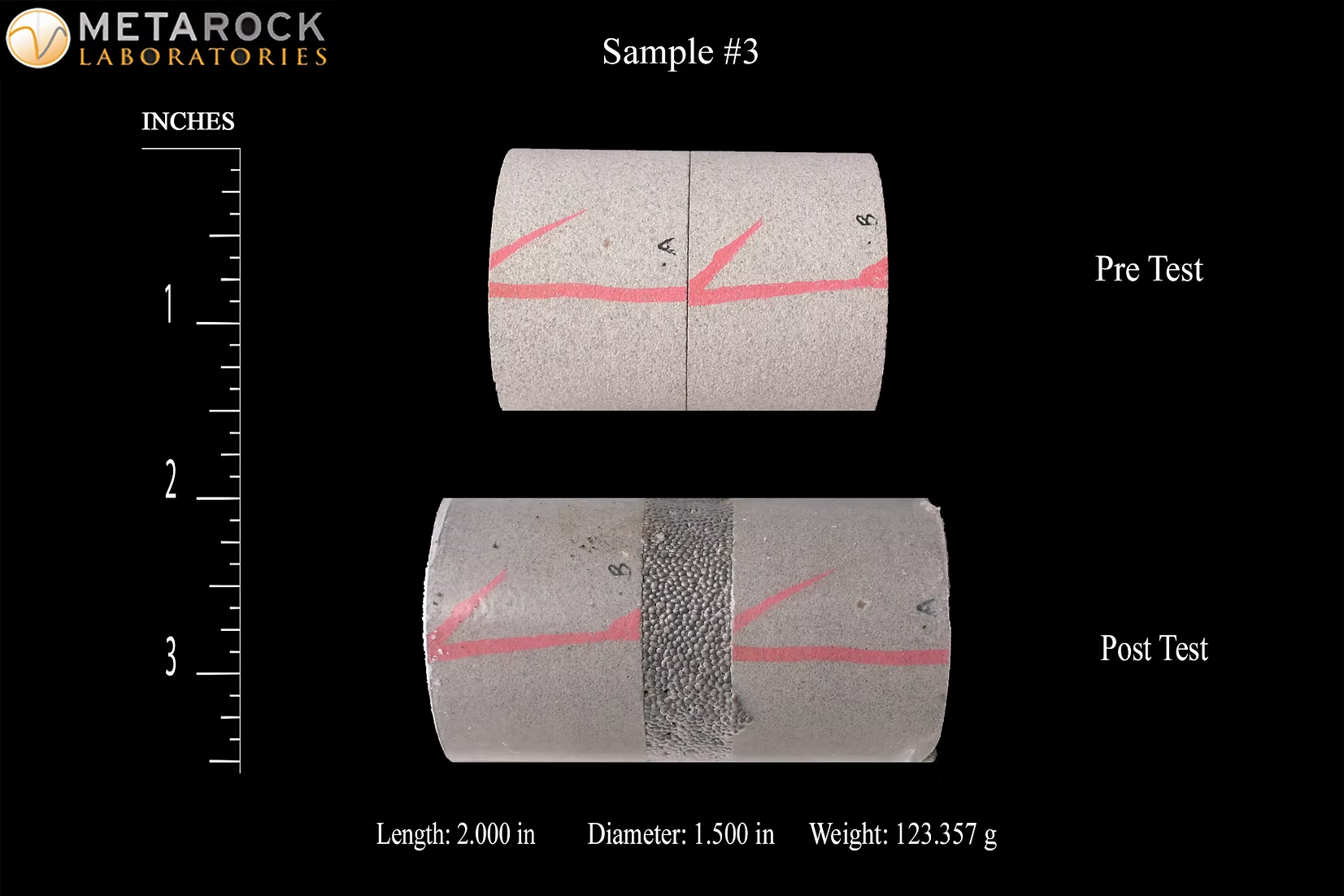
- Extent of proppant embedment into the fracture face
- Optional change in fracture conductivity
- Fracture aligned perpendicular or parallel to the plug axis
- Saw-cut or direct shear fracture faces
- Isostatic, triaxial or customised stress paths
- Documented by digital photography or microscope
Sample dimensions: 2″ or 3″ length, 1″ or 1.5″ diameter.
- Knowing the possibility and extent of embedment is critical to optimising completion design.
- A proppant that holds a fracture open in a stiff, strong rock may sink into a softer face and close the very channel it was placed to keep open, so the answer depends on the rock as much as on the proppant.
- The study is run with one or more layers of proppant on the fracture face.
- The fracture can be saw-cut or, more representatively, created through a direct shear test on the same plug — which is why we keep sheared samples rather than discarding them.
- The stress path can be isostatic, triaxial, or built to mimic the field development and production scenario being planned.