
Rock Mechanics Testing
Thermal Expansion Testing
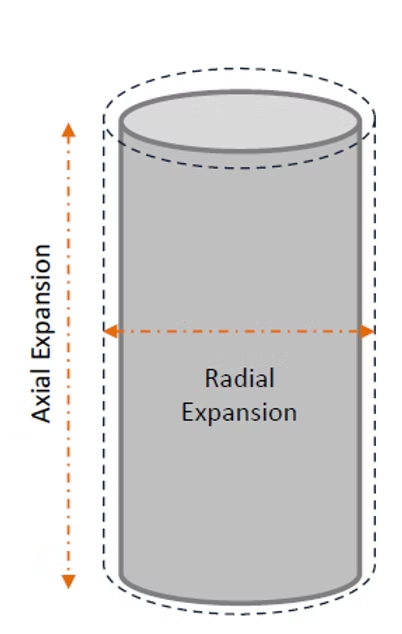
Determining the thermal expansion coefficient — the axial extension and radial expansion of a material as temperature changes — for rock in high temperature reservoirs, mining and civil projects, and for cement samples.
What you receive
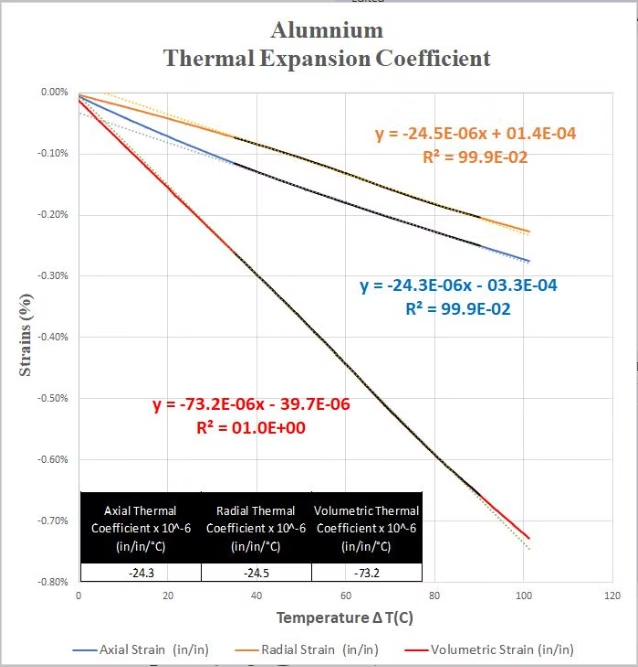
- Axial thermal expansion coefficient
- Volumetric thermal expansion coefficient
- Real-time axial and radial deformation
- Testing under confining pressure and differential stress
- Applicable to rock and cement samples
Maximum test temperature 250 °C.
- The thermal expansion coefficient is a material property indicating extension along the axis and expansion radially as temperature changes, on the assumption that change in length is proportional to change in temperature.
- It matters wherever rock or cement is going to see significant heat — high temperature reservoirs, geothermal wells, mining and civil projects.
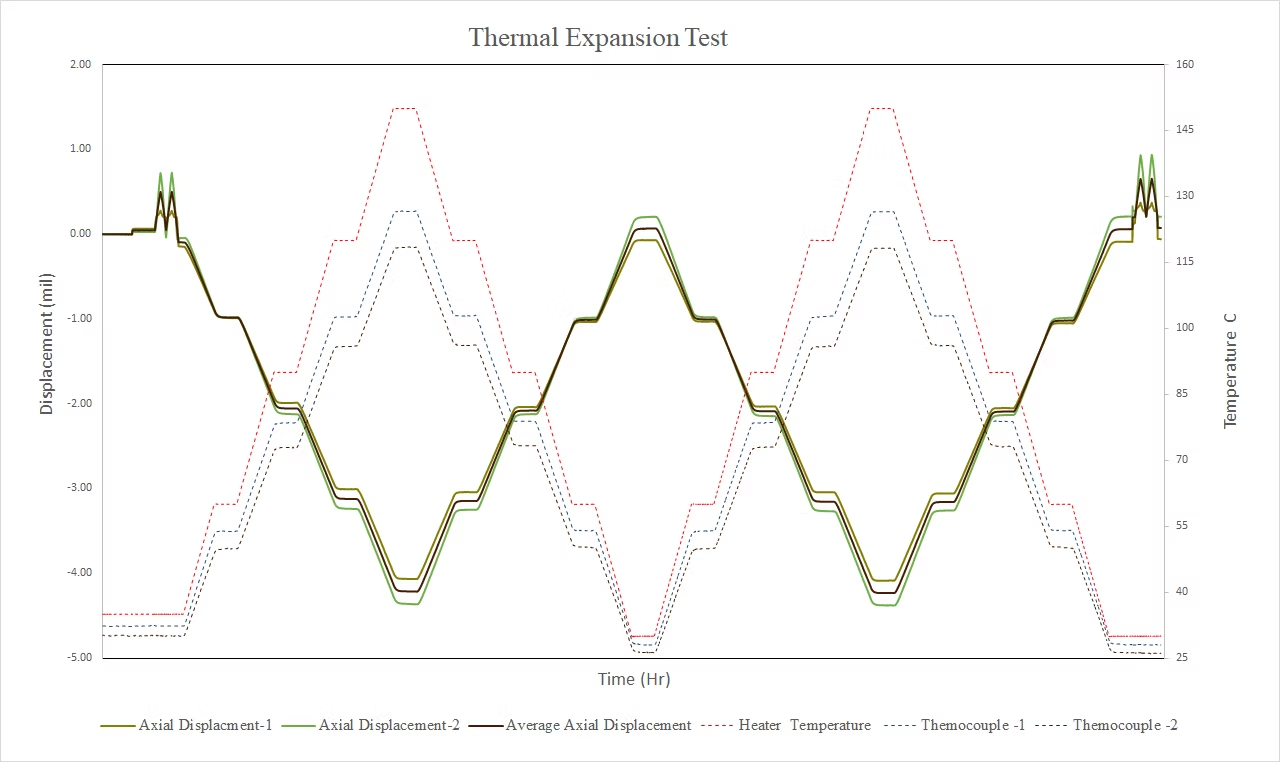
- The sample is held under confining pressure and differential stress while axial and radial deformation are measured in real time as temperature increases.
- The instrumentation — axial and radial strain measurement and a load cell — is built to keep working at those temperatures, which is the limiting factor in most thermal testing.