
Rock Mechanics Testing
Thick Wall Cylinder (TWC) Test
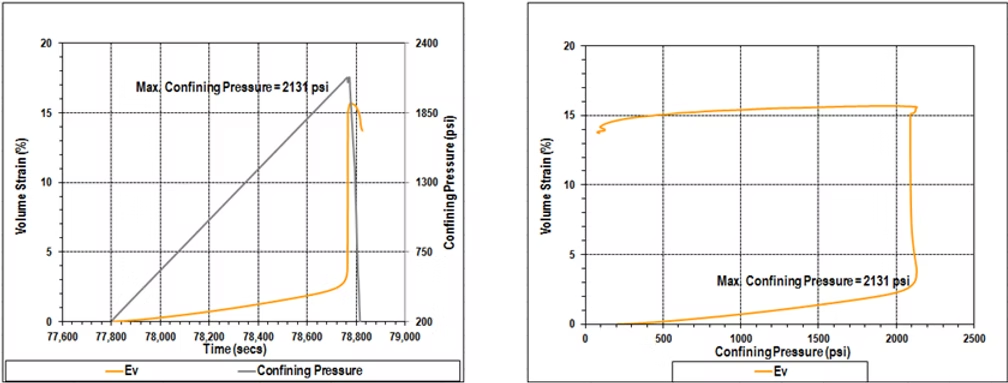
Sand production is a persistent cost in unconsolidated, poorly consolidated and weakly cemented reservoir rock. The TWC collapse test measures the stress at which a bored sample fails, giving the data to verify sand production models.
What you receive
- Collapse strength of the sample
- Verification data for sand production models
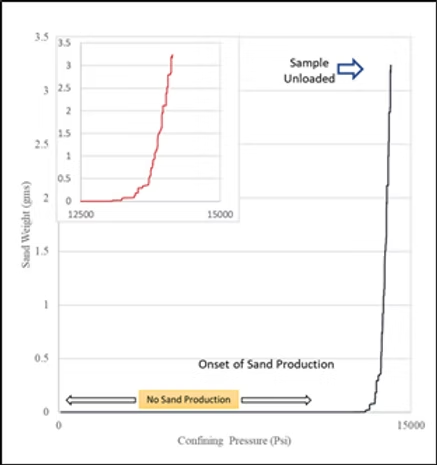
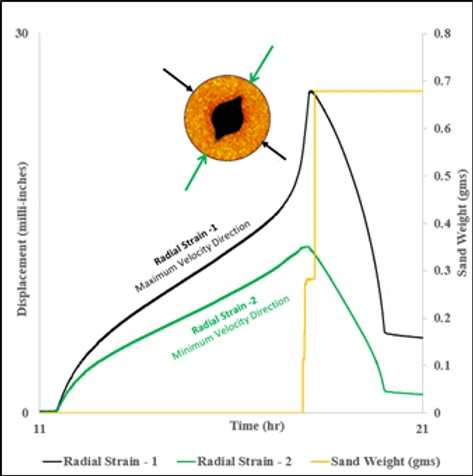
- Onset of sanding, detected in real time
- Testing with or without brine or oil saturation
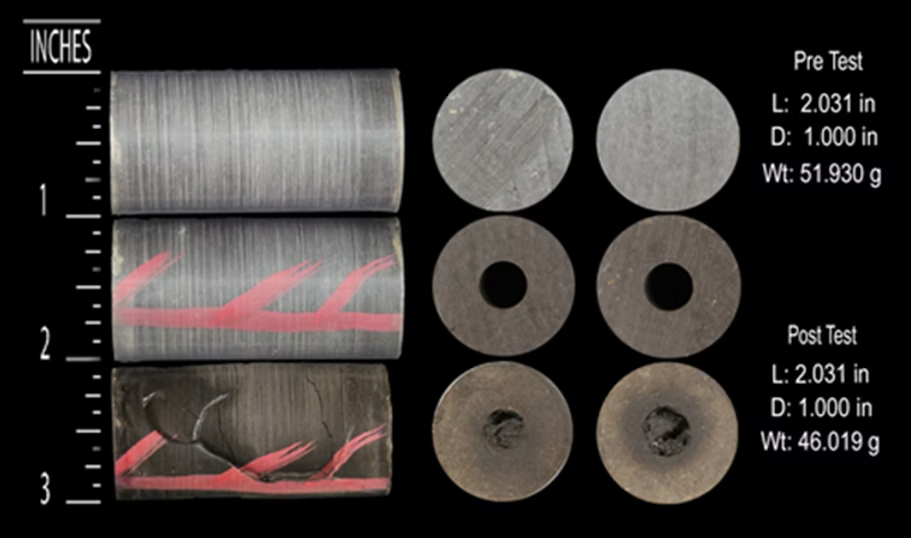
- Post-test sample available for further work
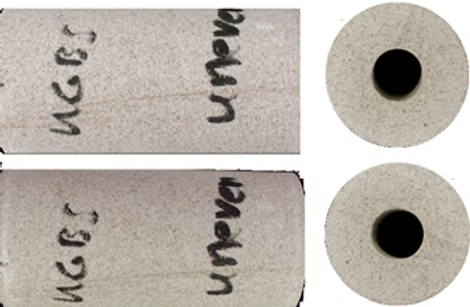
Sample dimensions: 3″ × 1.5″ or 2″ × 1″. Both sizes use an OD to ID ratio of 3:1.
- The incremental costs of sand production include managing produced sand, damage to surface facilities, corrosion of field equipment, reduced productivity and, in some cases, plugging of the wellbore.
- Analytical and numerical models exist to analyse the geomechanics behind it, but they need laboratory data before they can be relied on.
- The sample is bored along its axis to replicate a wellbore or perforation cavity, then subjected to gradually increasing isostatic stress until it collapses.
- In the modified version, a load cell monitors the amount of sand produced in real time, which allows the onset of sanding to be detected rather than only the final collapse strength.